

Oil Field Factoring Software for Energy Service & Oilfield Operations
Oil field factoring software is a specialized receivables platform that funds approved oilfield invoices while managing operator credit risk, project exposure, field documentation, and delayed payment cycles across energy operations.
Factor Avenue helps oilfield service companies and factoring providers stabilize cash flow across multi-region, project-based environments with structured funding controls and centralized visibility.
- Secure
- Audit-Ready
- Built for Oilfield Operations
- Multi-Location Support
What Is Oil Field Factoring Software?
Oil field factoring software is a receivables finance platform designed to fund oilfield service invoices while managing operator credit exposure, project approvals, and field documentation requirements.
Unlike generic factoring systems, it supports project-based billing, multi-site operations, and contract-driven funding workflows common in oil and gas environments.
Factor Avenue centralizes invoice validation, operator risk checks, and receivables tracking across projects and jurisdictions.

Who Uses Oil Field Factoring Software?

Decision-Makers & Finance Teams
CFOs, finance leaders, credit managers, and risk teams use the platform to approve funding, monitor exposure, and maintain cash flow discipline across oilfield projects.
Oilfield Service & Equipment Companies
Companies delivering drilling, completion, maintenance, logistics, and equipment services depend on factoring workflows to fund invoices while awaiting operator approvals and contract confirmations.
Energy Contractors & Subcontractors
Independent contractors and subcontractors manage milestone-based billing, delayed settlements, and multi-site field work using structured receivables processes instead of manual follow-ups.
Factoring Companies Serving Oil & Gas Clients
Factoring firms supporting energy-sector clients use the system to verify field documentation, assess operator credit exposure, and fund invoices with controlled risk.
Multi-Region Oil & Gas Operators
Operators active across multiple basins or regions rely on centralized receivables visibility to track funding exposure, approvals, and settlements across jurisdictions.
Joint Venture & Project-Based Energy Entities
Projects involving shared operators or joint ventures use factoring workflows to manage split billing, responsibility allocation, and complex approval chains without manual reconciliation.
Solving the Key Challenges in Oil Field Factoring
Receivables financing in oilfield operations involves complexities that do not exist in standard billing environments. Payment approvals, contract dependencies, and region-specific practices create delays and risk that require structured financial controls and clear visibility.
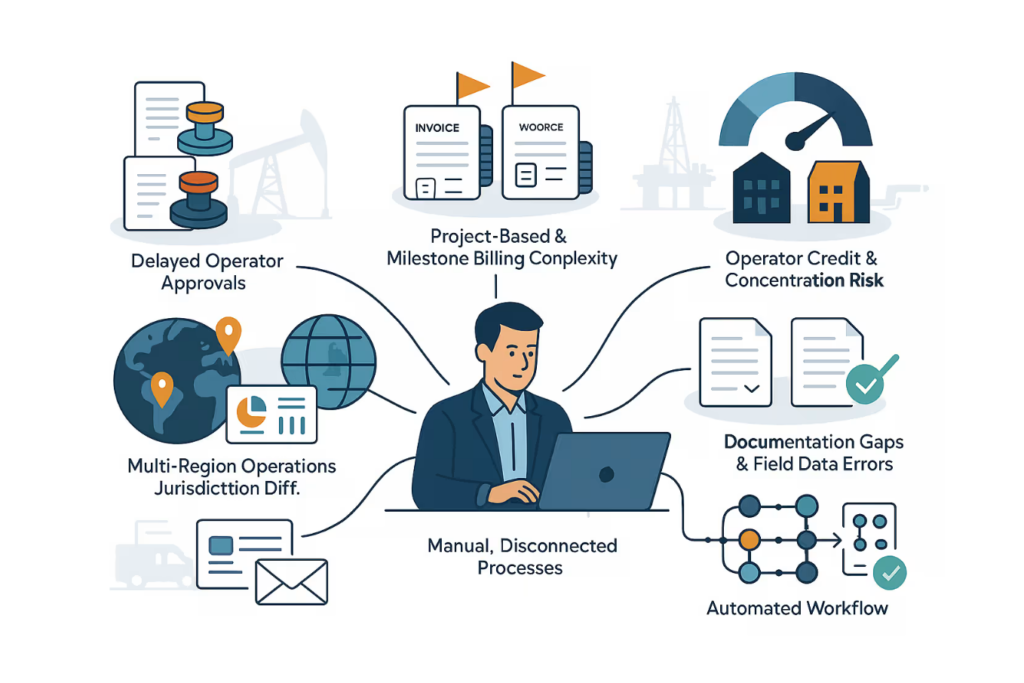
Delayed Operator Approvals & Long Payment Cycles
Invoices tied to oilfield work often pass through multiple approval layers before payment is released. Tracking invoice status by operator, project, and location helps reduce uncertainty and prevents avoidable funding delays.
Project-Based & Milestone Billing Complexity
Billing is frequently linked to work orders, field tickets, or milestone completion. Validating invoices against project terms ensures accuracy and prevents disputes before funding decisions are made.
Operator Credit & Concentration Risk
Reliance on a small number of operators increases financial exposure. Operator-level credit limits, concentration controls, and exposure monitoring help manage risk proactively.
Documentation Gaps & Field Data Errors
Missing field tickets, service reports, or approvals slow verification and create rework. Centralized document capture and validation reduce errors early in the funding process.
Multi-Region Operations & Jurisdiction Differences
Oilfield projects often span multiple basins and regions with different contractual and regulatory norms. Consolidated dashboards provide visibility across locations while maintaining region-specific controls.
Manual, Disconnected Processes
Email-driven approvals and spreadsheet tracking increase errors and delay decisions. Automated workflows replace manual steps with rule-based approvals and real-time alerts.
How the Oil Field Factoring Process Works
This workflow mirrors how oilfield invoices are approved and settled in real operations.
Invoice and Field Documentation Intake
Service providers submit invoices along with supporting field documents such as work tickets, service reports, delivery confirmations, and job approvals through secure portals or bulk uploads. This ensures invoices are complete and verifiable at the point of entry.
Contract and Operator Alignment Check
Submitted invoices are reviewed against operator contracts, rate agreements, project scope, and approval status. This confirms that billed work aligns with agreed terms before further processing.
Risk, Exposure, and Eligibility Review
Operator payment behavior, project exposure, funding limits, and outstanding balances are evaluated to determine eligibility. Only invoices that meet defined risk and policy thresholds move forward.
Approval Routing and Controls
Invoices requiring review are routed through structured approval workflows. Rule-based controls ensure consistent decisions without reliance on manual follow-ups or informal approvals
Funding and Disbursement Execution
Eligible invoices are funded using predefined advance rates and reserve logic. Disbursements follow controlled rules to maintain transparency, traceability, and audit readiness.
Collections, Adjustments, and Settlement Tracking
Payments are tracked by operator, project, and region. Partial payments, deductions, and final settlements are monitored clearly until each invoice is fully closed.
This structured workflow enables faster oilfield invoice funding while maintaining disciplined operator risk control and project-level visibility.
Key Features of Oil Field Factoring Software
The platform includes oil field factoring software capabilities built specifically for project-based energy receivables, where operator risk, contract validation, and field documentation directly impact funding decisions.
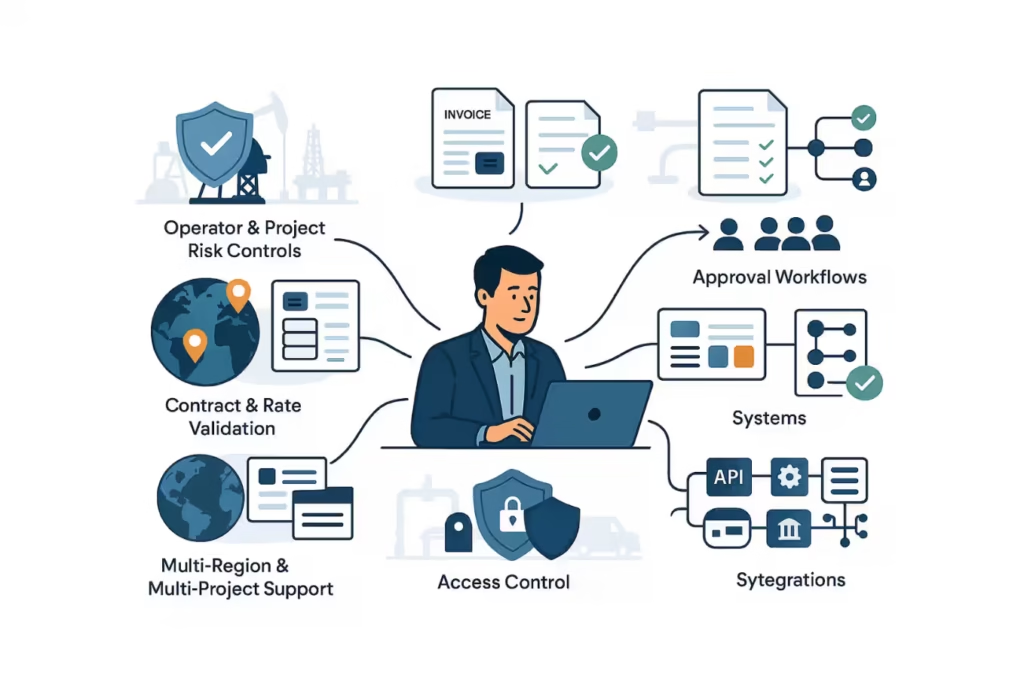
Operator & Project Risk Controls
The system applies risk controls at both operator and project levels. Credit exposure, outstanding balances, and concentration limits are monitored continuously to support informed funding decisions and prevent overexposure.
Field Documentation Management
Invoices are linked with required field documents such as work tickets, service reports, delivery confirmations, and approvals. Centralized document tracking reduces verification delays and minimizes disputes.
Contract & Rate Validation
Billing is validated against operator contracts, rate agreements, and project terms. This ensures invoices align with approved pricing and scope before funding is authorized.
Rule-Based Funding Logic
Funding follows predefined advance rates, reserve structures, and eligibility rules. This creates consistency across transactions while maintaining transparency and audit readiness.
Real-Time Receivables Visibility
Dashboards provide clear insight into invoice status, exposure, funding activity, and collections across projects, operators, and regions. This visibility supports proactive risk management.
Ongoing Monitoring & Alerts
Approval Workflows & Controls Invoices requiring review are routed through structured approval workflows. Role-based controls ensure decisions follow internal policies without manual intervention.
Multi-Region & Multi-Project Support
The platform supports oilfield operations across multiple locations and jurisdictions, allowing teams to manage receivables consistently while respecting region-specific practices.
Security, Audit & Access Controls
Role-based access, activity logs, and encryption protect financial and operational data while supporting audit and compliance requirements.
System Integrations
The software integrates with accounting, banking, and operational systems, enabling seamless data exchange without disrupting existing workflows.
See How Oilfield Factoring Works Across Your Projects
Understand how operator-level risk controls, project validation, and multi-region receivables tracking operate within your oilfield portfolio.
Factoring Models Supported for Oil Field & Energy Services
Oil field and energy service receivables are often tied to contract work, milestone billing, equipment rentals, and extended payment terms from large operators. Factor Avenue supports multiple factoring models structured to manage high-value invoices, concentration risk, and project-based settlements common in the energy sector.
Recourse Factoring
Ideal for service providers working with established operators. Businesses retain repayment responsibility while monitoring advances, retainage, and contract-based payment timelines.

Non-Recourse Factoring
Designed for companies seeking protection against operator default or project risk. Exposure monitoring aligns with approved contracts, credit limits, and insured thresholds.

Invoice Discounting
Supports confidential funding arrangements where oil field contractors maintain direct relationships with operators while accessing working capital against approved invoices.

Reverse Factoring
Applicable when large energy companies approve invoices before supplier payment release, enabling structured and predictable funding.

Export Factoring
Supports cross-border energy projects with extended international payment cycles, multi-entity exposure tracking, and currency-sensitive settlements.


Why Factor Avenue Fits Oilfield Factoring Requirements
Oilfield receivables financing demands strict control over operator risk, field documentation, and project-level exposure. Factor Avenue aligns software workflows with how oilfield billing and funding operate in real energy environments.

Built Around Oilfield Workflows
Designed for project-based invoicing, operator approvals, milestone billing, and field documentation validation. The platform reflects real oil and gas billing realities without relying on manual workarounds.

Risk-First Energy Financing Controls
Multi-layer exposure controls across operators, projects, and regions help prevent overfunding. Funding decisions follow eligibility rules and approval logic aligned with disciplined credit policies.

Proven at Energy-Scale Operations
Platforms engineered by the team support 50,000+ invoices daily and manage portfolios exceeding $500M across regulated, high-volume factoring environments.

Funding Accuracy in Complex Field Billing
Invoices are validated against contracts, rate schedules, and supporting field documents before funding, reducing disputes and post-funding adjustments.

Enterprise Security & Audit Readiness
ISO-aligned security practices, SOC 2–ready infrastructure, encryption at rest and in transit, role-based access controls, and detailed audit logs protect financial and operational energy data.

Supports Multi-Project & Multi-Region Operations
Manage receivables across basins, operators, and jurisdictions with centralized dashboards and consistent risk controls.
Frequently Asked Questions About Oil Field Factoring Software
What is oil field factoring software?
Oil field factoring software is a financial platform used to fund invoices generated by oilfield service and energy operations while managing operator risk, project approvals, and receivables exposure.
Who should use oil field factoring software?
It is used by oilfield service companies, energy contractors, factoring firms, and finance teams that manage project-based invoicing and delayed operator payments.
How does oil field factoring software improve cash flow?
The software converts approved oilfield invoices into working capital, allowing businesses to maintain liquidity while waiting for operator payment cycles to complete.
Can it handle project-based and milestone billing?
Yes. The platform supports project-based billing by validating invoices against milestones, work orders, and contract terms before funding.
How does the system manage operator credit risk?
Operator exposure is controlled through credit limits, eligibility rules, and real-time visibility into outstanding balances across projects and regions.
Does it support multi-location oilfield operations?
Yes. The platform is designed to manage invoices across multiple sites, basins, and jurisdictions while maintaining centralized financial control.
How are field documents managed in the system?
Invoices are linked with supporting documents such as field tickets, service reports, approvals, and delivery confirmations, ensuring accuracy and audit readiness.
Is the software suitable for high-volume oilfield receivables?
Yes. The platform is built to handle large invoice volumes across multiple projects without relying on manual reconciliation or spreadsheets.
Can it integrate with accounting or banking systems?
Yes. Integration with accounting, banking, and operational systems allows data to flow seamlessly without disrupting existing workflows.
Is oil field factoring software compliant with financial controls and audits?
The system includes role-based access, approval logs, and complete transaction histories to support compliance, audits, and internal control requirements.
How long does it take to implement oil field factoring software?
Implementation timelines depend on workflow complexity and integration needs, but most teams can configure core rules, onboard users, and begin testing within a short setup period using structured onboarding.
Fund Oilfield Receivables With Structured Control
See how oil field factoring software can help you manage operator risk, project-based billing, and multi-region receivables with disciplined funding workflows.