




Governance, Permissions & Security for Factoring Companies
Factoring software security ensures controlled access, policy enforcement, and protection of financial data across funding, reserve, and risk workflows.
Factor Avenue delivers role-based permissions, approval hierarchies, structured audit trails, and enterprise-grade infrastructure to maintain operational control at scale.
Built for factoring companies managing high-value invoices, multi-user workflows, and regulated financial environments.
What Governance, Permissions & Security Mean in Factoring Software
Governance in factoring software defines how access, approvals, and operational rules are controlled across funding, reserves, credit evaluation, and collections workflows.
Permissions determine who can view, edit, approve, release, or override financial transactions. Structured access controls prevent unauthorized actions while preserving workflow efficiency.
Security protects financial data, client records, credit intelligence, and funding activity through encrypted systems, authenticated access, and continuous audit logging.
In modern factoring operations, governance is a foundational control layer that protects capital, enforces policy, and ensures compliance as transaction volume grows.
Operational Risk Control in High-Value Factoring Environments
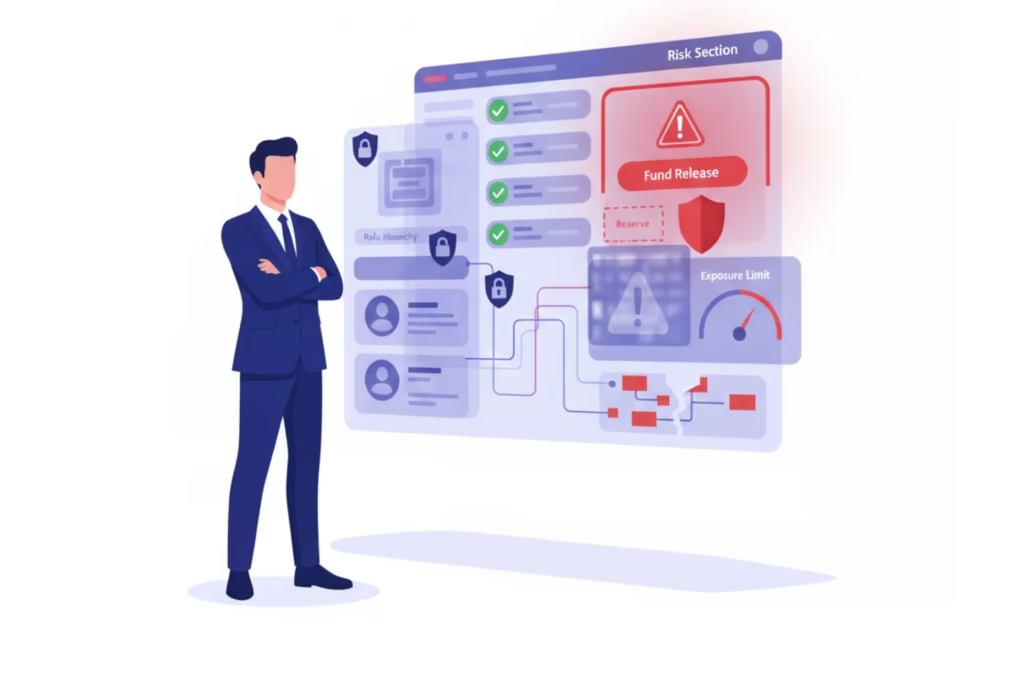
Governance and access control in factoring software protect financial data, enforce approval policies, and prevent unauthorized funding or reserve actions.
Factoring companies manage high-value invoices, credit-sensitive data, and multi-stage funding workflows. Even a single unauthorized funding release can expose significant capital and damage operational credibility.
Risks increase when:
- Unauthorized users can release funds
- Reserve adjustments lack oversight
- Exposure limits are bypassed
- Sensitive data is accessed without restriction
- Audit trails are incomplete
As operations scale, manual supervision is not sufficient. Role-based permissions, approval hierarchies, and structured logging ensure every action follows defined policy.
Strong governance reduces operational risk, strengthens compliance, and maintains control across the full factoring lifecycle.
Challenges in Factoring Governance & How They Are Controlled
As factoring operations scale, governance complexity increases. Without structured access control and approval discipline, operational and financial risks rise significantly.
Unauthorized Funding Releases
When user access is loosely managed, funds may be released without proper authorization. Structured approval hierarchies and role-based permissions ensure funding actions require defined authorization before execution.
Reserve Manipulation & Exposure Overrides
Manual reserve adjustments or exposure limit overrides without oversight can distort portfolio risk. Multi-level authorization and traceable audit logs prevent unilateral financial changes.
Incomplete Audit Trails
In fragmented systems, edits and approvals may not be fully traceable. Comprehensive activity logging ensures every funding, reserve, and permission action is timestamped and documented.
Excessive Access Privileges
When users retain broad permissions beyond their role, internal risk increases. Granular permission settings enforce strict separation of duties across risk, finance, and operations teams.
Compliance Gaps in Regulated Environments
Factoring companies operating under insurer or lender oversight require documented governance controls. Structured logging and policy-driven workflows ensure audit readiness at all times.
Governance Architecture Embedded in Funding Workflows
Factor Avenue embeds governance directly into funding, reserve, credit, and collection workflows. No financial action occurs without structured authorization.

Role-Based Access Control (RBAC)
Access is assigned based on operational roles such as risk, finance, collections, or management. Each user is restricted to actions defined by their assigned role.

Granular Permission Settings
Permissions can be configured at module, feature, or action level to control funding approvals, reserve edits, credit adjustments, reporting access, and system configuration.

Approval Hierarchies
High-value funding releases, reserve movements, and exposure overrides can require multi-level authorization to prevent unilateral execution.

Separation of Duties
Funding approval, disbursement, reserve adjustment, and write-offs can be distributed across different roles to reduce internal fraud and operational error.
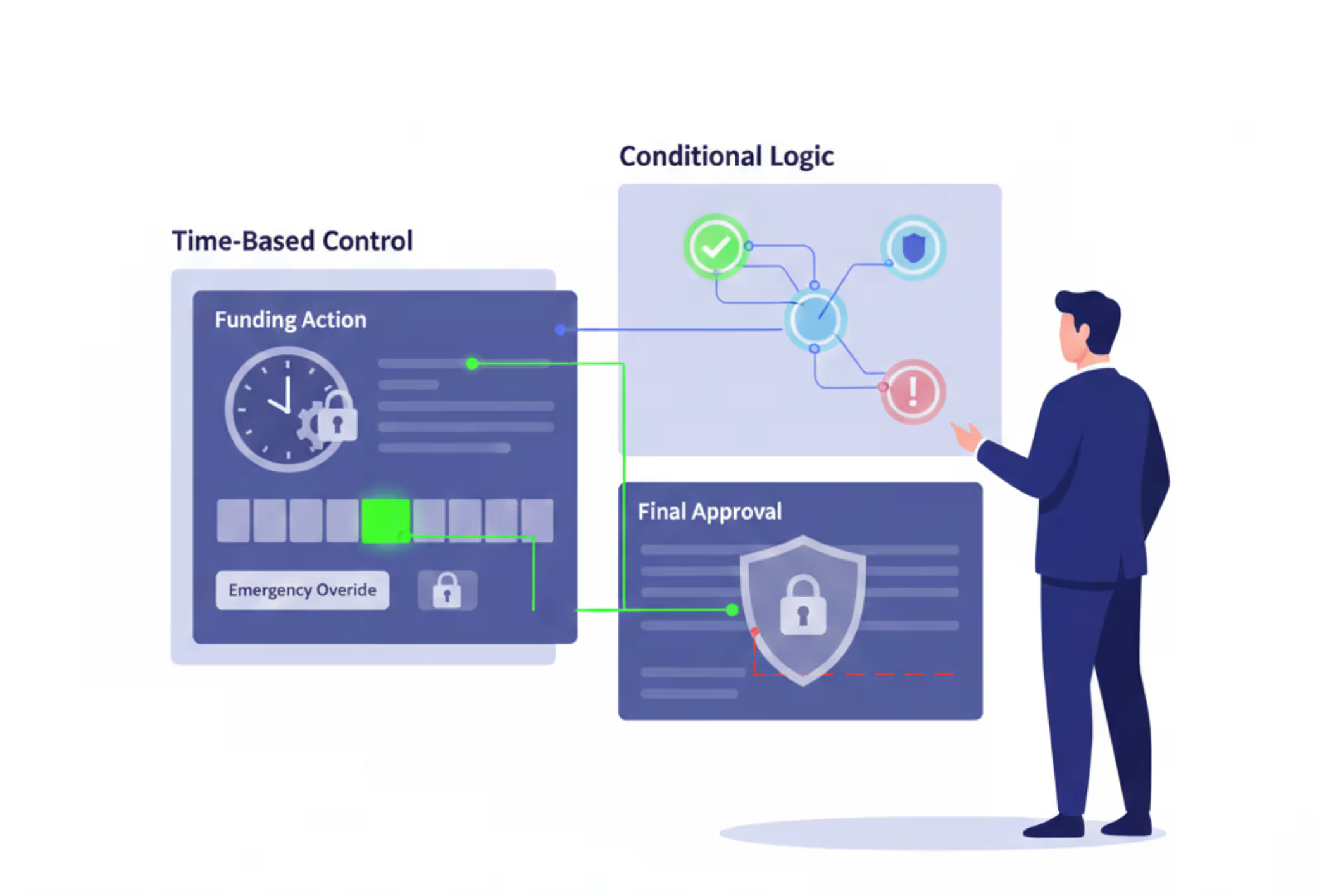
Conditional & Time-Based Controls
Permissions and actions can follow defined conditions and time windows to ensure policy enforcement aligns with operational rules.

Audit Trails, Monitoring & Accountability Controls
Effective governance requires complete operational traceability across funding and risk workflows.
Comprehensive Activity Logging
Every action including invoice approval, funding release, reserve adjustment, credit limit change, and permission update is recorded with timestamp and user identification.
Structured Change History
All edits to invoices, funding terms, reserve rules, and exposure limits are preserved in history logs. No critical data can be overwritten without traceability.
Funding & Reserve Transparency
Advance calculations, fee deductions, reserve releases, and reversals remain fully documented for internal review and external audits.
User Activity Monitoring
Administrative teams can monitor login activity, permission changes, and high-risk actions to detect anomalies early.
Compliance-Ready Documentation
Audit logs support insurer reviews, lender oversight, and regulatory audits without manual reconstruction of records.
Data Security & Infrastructure Protection
Factoring companies handle sensitive financial and credit data. Governance must extend beyond permissions into infrastructure-level security.
Factor Avenue operates on enterprise-grade cloud infrastructure designed to protect invoice records, funding data, reserve balances, and client information.
Encrypted Data Transmission
All system data and integrations operate under encrypted communication protocols.
Secure Data Storage
Financial records and audit logs are stored within controlled infrastructure environments with strict access policies.
Authenticated Access Controls
Structured authentication mechanisms reduce unauthorized access risk and protect financial workflows.
Environment Segmentation
Logical separation prevents cross-client data exposure and maintains portfolio integrity.
Business Continuity Controls
Structured backup protocols and disaster recovery safeguards ensure operational continuity in the event of system disruption.
Audit Trails, Monitoring & Accountability Controls
Factoring companies operate in regulated financial environments where documentation, access control, and financial traceability are mandatory.
Factor Avenue aligns governance workflows with structured compliance requirements to maintain audit readiness and insurer transparency.
Policy-Enforced Workflows
Funding approvals, reserve releases, exposure adjustments, and permission changes follow defined approval structures.
Separation of Duties Enforcement
Critical financial actions can require multi-level review to reduce internal risk.
Structured Documentation Controls
Document uploads, expiry reminders, and compliance checklists ensure required records are maintained.
Audit-Ready Reporting
Governance reports provide visibility into user access, funding actions, reserve movements, and system activity.
Insurer & Lender Transparency Support
Detailed transaction logs and permission histories demonstrate operational discipline to insurers, investors, and banking partners.
Built for Every Type of Factoring Model
Governance and permissions must adapt to different funding structures. Factor Avenue aligns access controls, approval thresholds, and audit tracking to each model’s risk and settlement logic.
Recourse Factoring
Controls client liability exposure, reserve management, and repayment timelines with structured approval workflows.
Non-Recourse Factoring
Enforces credit protection limits, debtor exposure monitoring, and insured thresholds.
Invoice Discounting
Maintains confidential funding controls with restricted visibility and exposure oversight.
Reverse Factoring
Aligns buyer-approved invoice workflows with structured supplier payment authorization.
Export Factoring
Controls cross-border exposure, extended payment cycles, and multi-entity risk oversight.
Why Choose Factor Avenue for Governance, Permissions & Security?
Unlike generic financial software or CRMs, Factor Avenue embeds governance directly into funding logic, reserve management, exposure tracking, and credit evaluation workflows.
Governance strengthens factoring performance by reducing risk while preserving funding speed.
Factoring-Specific Governance Architecture
Permissions and approvals align with invoice funding and reserve workflows, not generic accounting events.
Centralized Control Across All Modules
User roles, approvals, and audit logs operate consistently across onboarding, funding, reserves, collections, and reporting .
Real-Time Operational Visibility
Administrative teams can monitor access activity and financial actions without manual tracking.
Enterprise-Grade Security Framework
Encrypted transmission, authenticated access, structured logging, and secure infrastructure protect sensitive financial and credit data.
Scalable Governance for High-Volume Operations
As funding volume grows, structured controls maintain discipline without slowing operational performance.
Frequently Asked Questions – Governance, Permissions & Security
What is governance in factoring software?
Governance refers to structured controls that manage user permissions, approval workflows, audit tracking, and policy enforcement across funding and reserve operations.
How does role-based access control work?
Can funding or reserve actions require multiple approvals?
Yes. High-value or high-risk actions can require multi-level authorization before execution.
Are all user actions logged?
Yes. All financial and permission-related actions are recorded with timestamps and user identification.
How is governance in factoring software different from generic financial systems?
Factoring governance must control funding releases, reserve adjustments, credit exposure, and collections workflows. Generic systems typically lack these factoring-specific controls.
Is the system audit-ready?
Yes. Structured logs, approval histories, and access records support audits, insurer reviews, and regulatory requirements.
Can governance rules be customized?
Yes. Permissions, approval thresholds, and policy workflows can be configured to align with your factoring model and internal risk framework.
Secure Your Factoring Operations
Control access. Protect capital. Stay audit-ready.
Factor Avenue provides role-based permissions, approval workflows, structured audit trails, and enterprise-grade security built specifically for factoring companies.